New Book: Seasons of a Wild Life

I am thrilled to share that the book I’ve been working on for the past four years, Seasons of a Wild Life, has been published by Bold Story Press.

Seasons of a Wild Life is an intimate journey through the seasons of the year and a love letter to our diverse and ancient human-nature interactions. It is based on my experiences as a homesteader and land steward in the Virginia Highlands, my deep interest in nature mythology and symbology from around the world, and my personal commitment to live lightly on the earth. I love to help others reconnect to nature through forest bathing, foraging classes, and retreats – and now my book.

The book takes you through the calendar year from January to December. In each chapter, you meet deities personifying nature’s forces that month, from frost giants to the Grain Mother.

You learn about nature celebrations still observed around the world, from the winter solstice to ancient Beltane merriment to harvest festivals. You come to know the animals that live in our mountain environment—bear, snake, deer, spider—and hear about their habits and cultural symbolism.

You meander through garden and landscape witnessing the frosty, fallow land in winter, the exuberant eruption of the life force in spring, and the voluptuous abundance of autumn.

You discover wild plants that offer beauty, food, and medicine, from stinging nettle to elderberry to witch hazel. You may feel inspired to learn a new skill or embrace a concept that connects earth-friendly practices to the challenges facing us as a world community.

You can find out more on my author website.
Seasons of a Wild Life is available on Bookshop and Amazon.

Wilderness Survival & Foraging Weekend

Wilderness Survival & Foraging:

A Weekend Intensive Sept 8 – 10, 2023

  Highland County, VA

If you were caught in the aftermath of an urban and/or natural disaster or got lost in the wilderness on a hiking trip, could you survive for a week?

Learn essential skills to keep yourself and loved ones alive:

  • Build shelter without tools
  • Find and purify water
  • Make fire without a lighter or matches
  • Forage for wild foods
  • Treat simple injuries with herbs

A collaboration between Steve Pullinger (434 249 0419), Wilderness Survival Expert, and Annette Naber (540 290 4033), Foraging Teacher and Eco Therapist.

Click here for more info and to register.

Spring Foraging

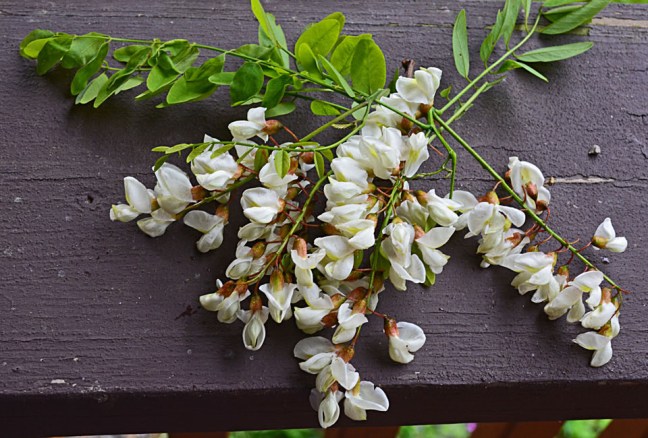
Now, at the end of May, the air is fragrant with the delicate floral aroma of black locust blossoms.

Black locust trees (Robinia pseudoacacia) are well known for the durability of their wood; not everyone knows that their creamy white blossoms are edible. Eaten fresh, they have an unmistakable pea-like taste. I have made fritters with them in the past, and baked them into cakes or breads.

If you are lucky to come across some low-hanging blossoms, you can quickly harvest a substantial amount. Don’t they look playful and even a bit romantic?

Locust blossoms
Locust blossoms

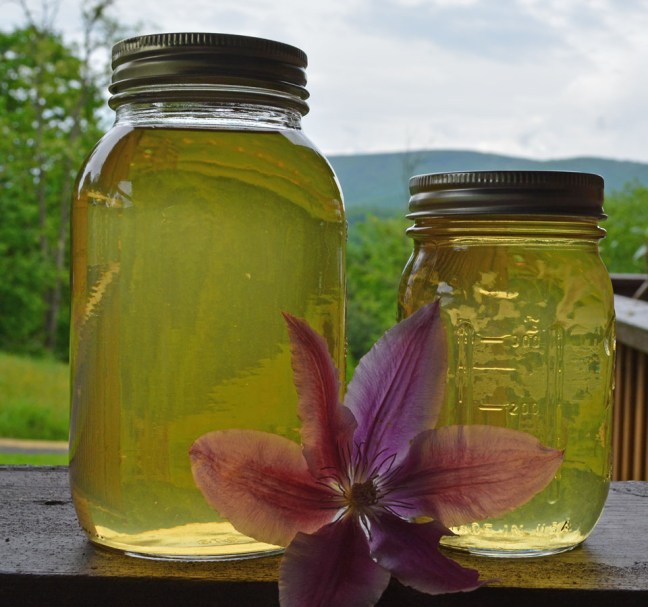
I make a hot tea by simmering the blossoms in hot water, then straining the blossoms out and adding honey or sugar. A soothing tea on cool, rainy evenings. The tea can also be chilled and enjoyed as a refreshing lemonade.

Locust blossom tea
Locust blossom tea

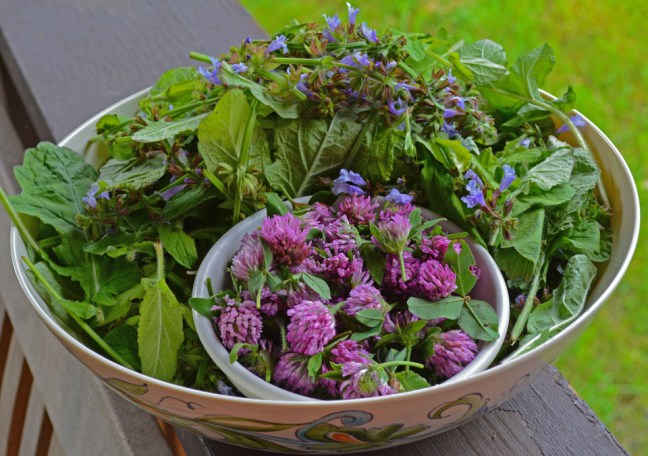
Two other wild foods that required a bit more effort to harvest today were red clover (Trifolium pratense) and lyre-leaf sage (Salvia lyrata). Because my husband was going to mow our front field, I did a walk-through to see if there was anything I wanted to rescue first. I found lyre-leaf sage growing in abundance and red clover showing its first blooms.

Salvia Lyrata is a medicinal and edible herb. It can be used as a gargle to treat sore throat and mouth infections. A warm infusion serves as a laxative, eases colds and coughs and calms a nervous person. Young leaves can also be added fresh to salads or cooked as a pot herb.

Red clover has a long history of uses. Considered a blood “purifier,” it has been used in alternative anti-cancer treatments. It is a blood thinner, and a pain reliever for skin conditions. Red clover also has a high concentration of phytoestrogens and contains anti-oxidant and anti-inflammatory components. While red clover’s medicinal use is best left to qualified health professionals, a gentle cleansing tea from its flowers can probably be enjoyed by most.

I am dehydrating both the lyre-leaf sage and red clover I collected today to add them to my home apothecary for later use.

If you plan to visit Highland County, VA and would like to participate in a “Backyard Foraging” tour, contact me here.